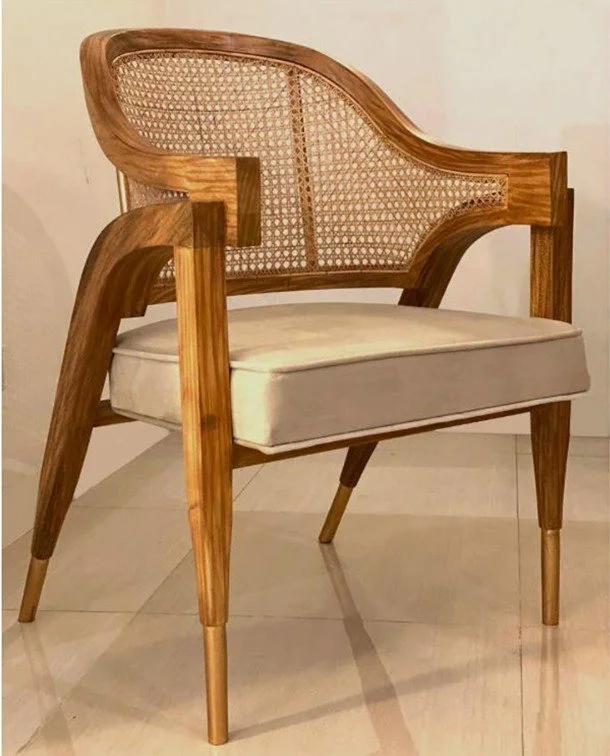
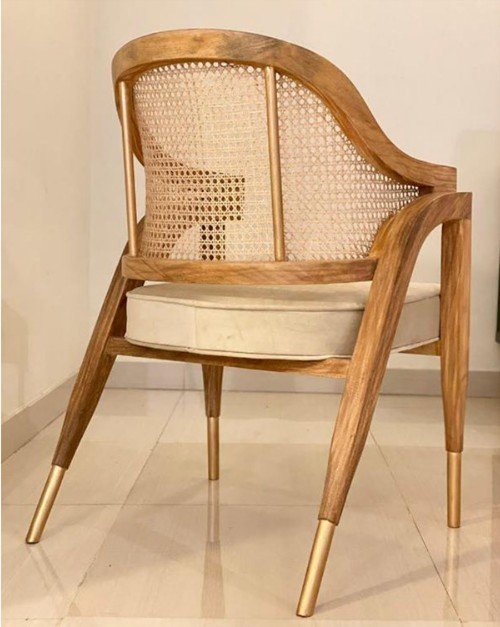
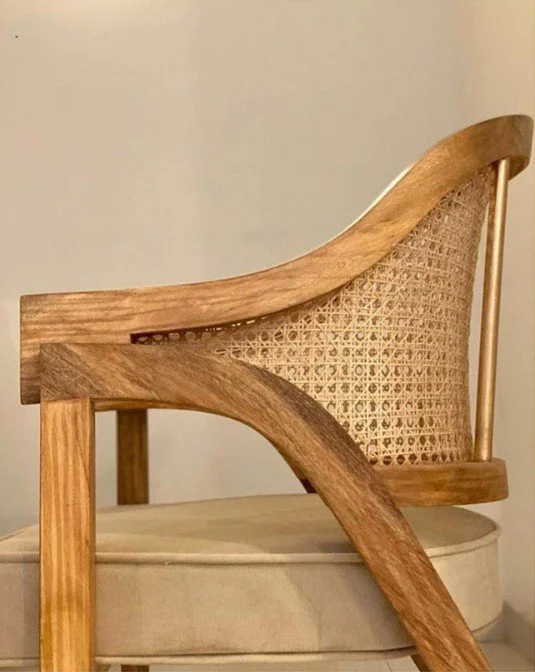
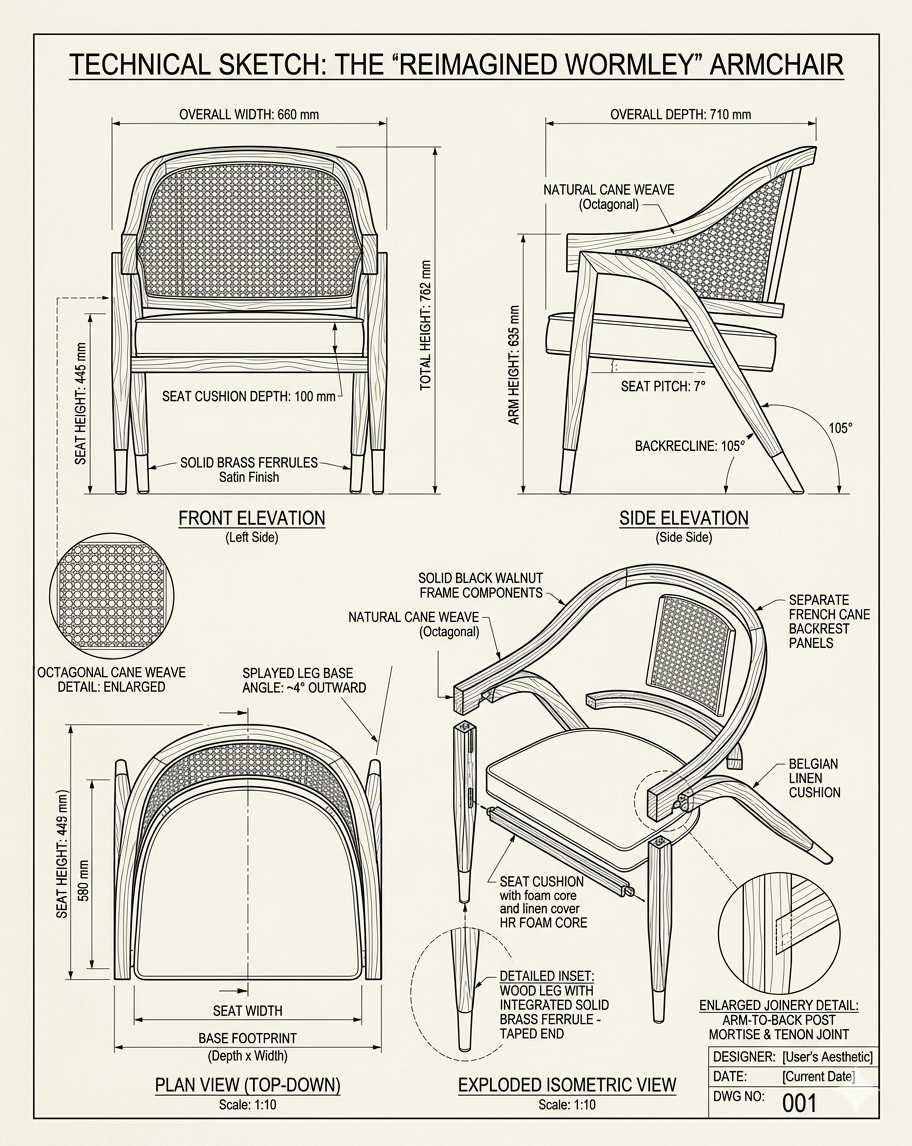
The Wormley Reimagined: Transitional Luxury Armchair
Project Title: Recontextualizing Mid-Century Modernism for the Contemporary "Quiet Luxury" Market
Designer: [Your Name/Aesthetic]
Series Name: The Wormley Reimagined
Role: Lead Designer & Craftsman
Context: Creating a bespoke, high-end accent piece that bridges the gap between 1950s archival design and 2020s sophisticated minimalism.
1. Project Background and Objective
The high-end residential market is currently seeing a move away from "industrial" modernism toward "warm" modernism. However, original mid-century pieces often feel too dark or visually "heavy" for bright, airy contemporary interiors.
My core challenge was to take the iconic "New-Precedent" silhouette by Edward J. Wormley and strip away the mid-century bulk. The objective was to create a chair that feels archival yet brand new—achieving a "jewelry-like" level of detail while utilizing traditional craft techniques.
2. Design Inspiration: The Synthesis of Heritage and Modernity
We started by exploring two distinct visual languages to address the requirement for a "lighter" luxury aesthetic:
Heritage Craft: The Cane Weave: I took inspiration from traditional French caning. This offered a solution for achieving a high-back silhouette that remains visually transparent, allowing light to pass through the piece and making it ideal for open-concept living.
Modern Sophistication: Tapered Precision: To convey a sense of "Quiet Luxury," I looked to high-end watchmaking and jewelry. The transition from organic walnut to precision-machined brass at the feet provides a "grounded" but elevated character.
This core design concept—Architectural Transparency—was central to the visual strategy.
3. Developing the Design Concept
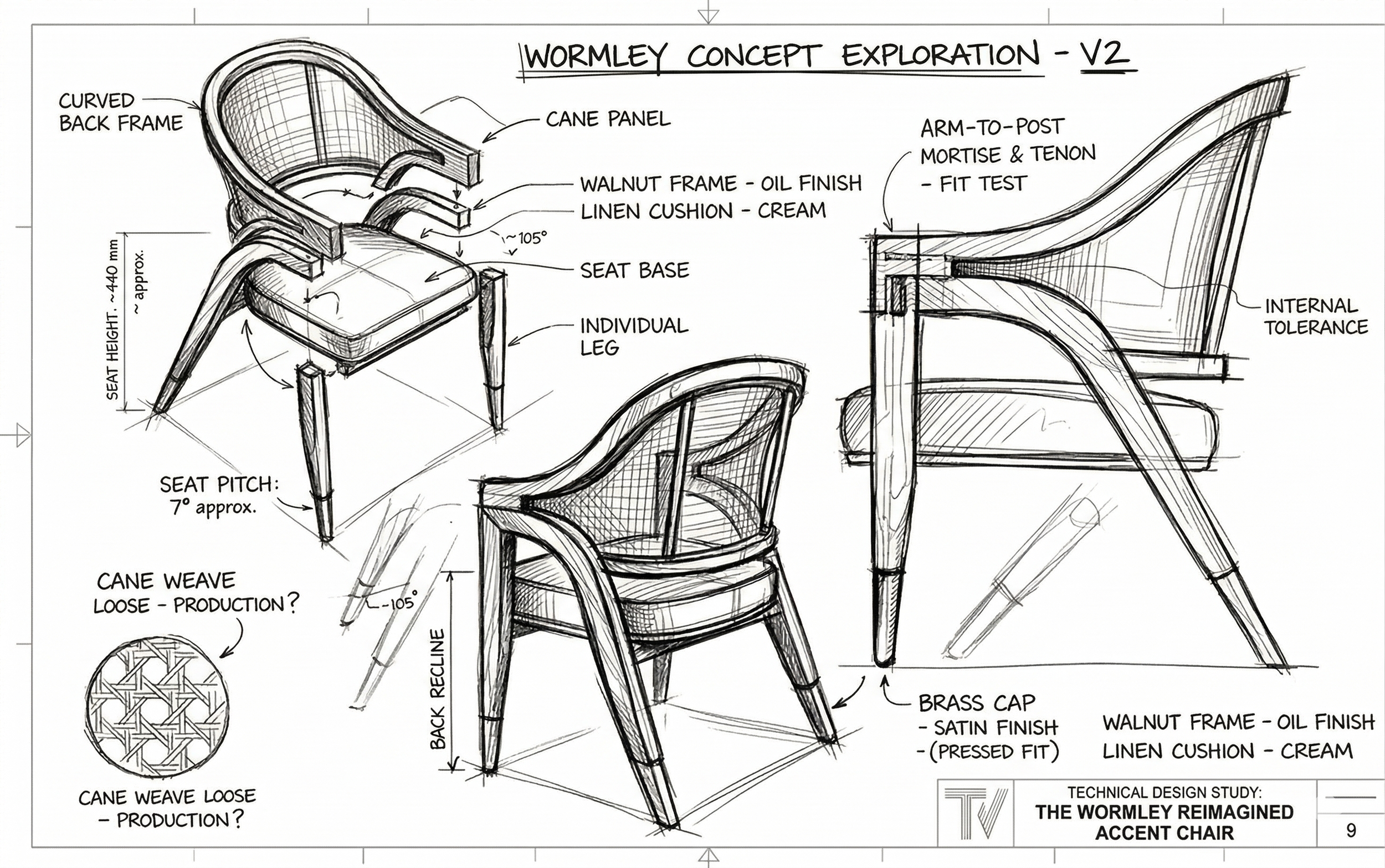
Early concept sketches were critical for defining how the organic wood frame and the geometric cane inserts would merge. These sketches focused on two primary design goals:
A. Ergonomic Pitch and Profile
I explored the relationship between the seat and backrest to ensure long-term comfort without the need for overstuffed upholstery. The sketches established a 7° seat pitch and a 105° back recline, creating a relaxed "lounge" feel within a compact armchair footprint.
B. Structural Elegance and Joinery
It was essential to test how the splayed legs met the armrests. I used technical drafting to analyze the Mortise-and-Tenon junctions. The central "floating" backrest was conceived not just as a stylistic feature, but as a way to reduce the physical weight of the chair, making it easier to move within a room while maintaining rigid structural integrity.
4. Engineering for Luxury: The Material Matrix
The key to the success of this reimagining lies in the high-contrast material selection. Traditional Wormley pieces often used mahogany or dark walnuts with heavy fabrics.
The Frame: I utilized Solid Black Walnut with a hand-rubbed satin oil finish to highlight the natural, raw character of the wood grain.
The "Jewelry" Element: To update the 1950s look, I implemented Solid Brass Ferrules on the tapered legs. This adds a refined focal point at the base of the chair, signaling "bespoke quality" to the user.
The Breathable Back: By integrating a natural octagonal cane weave into a recessed walnut groove, I achieved a "weightless" aesthetic. This reduces the amount of foam and fabric needed, focusing instead on the beauty of the raw materials.
5. Final Result and Aesthetic Success
The Wormley Reimagined delivers a powerful, high-end presence through meticulous material pairing rather than excessive ornamentation.
Key Performance Indicators (KPIs) and Why It Succeeded:
Aesthetic Impact: The high-contrast palette of cream linen, dark walnut, and gold brass creates a sophisticated, "boutique" look.
Visual Transparency: The caned back allows the chair to occupy a space without "crowding" it, making it a perfect solution for modern urban luxury apartments.
Craftsmanship as Branding: By exposing the joinery and using authentic materials (Solid Brass, Solid Walnut, Natural Cane), the piece justifies its position in the luxury "collectible design" market.